

Developing and executing successful AI roadmaps is a complex endeavor, and the most common reason for failure is insufficient attention paid to the crucial human and organizational elements. An AI roadmap represents a fundamental shift in how work is performed, decisions are made, and value is created.
Related: Fluency First makes the case that the org chart should move last -- after fluency and systems.
The failure of technology-first approaches
Focusing exclusively on the algorithms, data pipelines, and infrastructure of the AI system will inevitably lead to stalled projects or deployed models that fail to achieve their intended business impact. AI initiatives are doomed to fail unless people, organizational changes, and necessary support are proactively and systematically addressed.
Key areas for organizational and human change to make AI successful
Workforce reskilling and training: The introduction of AI changes job roles. Employees need targeted training not just to understand the AI’s outputs, but to integrate it into their daily workflows, interpret its results, and collaborate effectively with automated systems. This includes training for “AI fluency” across the organization, not just for data scientists.
Change management and adoption: Resistance to change is a natural human reaction, especially when the change involves automation that may be perceived as a threat. Effective change management is mandatory, requiring clear communication about the AI’s purpose, the expected benefits, and a focus on how AI will augment, not merely replace, human capabilities. Our Director of Deployment, Ali Ruben, goes further: in AI deployments, change management is no longer a phase at all -- it runs the whole time. Buy-in from end-users is the ultimate measure of an AI project’s success.
Data governance and stewardship: AI requires high-quality, ethically sourced data. This necessitates establishing new roles, processes, and policies for data governance, ensuring data quality, privacy compliance, and responsible usage. The organizational structure must empower data stewards to maintain this critical asset.
Process redesign and integration: AI tools often highlight inefficient or outdated business processes. A successful roadmap must include the effort to redesign existing processes around the new capabilities offered by AI. Simply bolting on AI to a broken process yields negligible results.
Leadership commitment and sponsorship: AI initiatives require significant investment and often cross departmental boundaries. Without sustained, visible sponsorship from senior leadership, projects will lack the necessary resources and organizational mandate to drive disruptive change. Leadership must champion a culture that values data-driven decision-making and experimentation.
An effective AI roadmap must incorporate a holistic transformation strategy. Neglecting the organizational maturity, cultural readiness, and human support structures will render the most technically brilliant AI solution inert and unable to deliver business value. While many procurement functions have identified and begun to deploy AI use cases in Procurement, the real bottleneck is rarely the technology. It is the human transition into an integrated cognitive and agentic AI structure: one where cognitive AI provides prescriptive insights for better decision-making, and agentic AI executes multi-step tasks autonomously (with calibrated human-in-the-loop oversight).
Leadership in this environment requires a radical commitment to transparency. Uncertainty is the primary driver of resistance; when the evolution of AI unfolds at such a rapid pace, the historical standard of monthly or quarterly updates is insufficient. Leaders must move beyond being “workflow managers” to become “mindset leads” who increase both the frequency and quality of communication to provide a consistent signal within the noise. This ensures the human element of the function feels supported as a partner in the transition, rather than a bystander to it. Crucially, during this transition, leaders must maintain a close read on pockets of adoption and pockets of resistance. By identifying where AI is being embraced and where it is being blocked by a “threat state” (the neurological reaction to professional obsolescence), leaders can proactively provide targeted support to those struggling and amplify the successes of early adopters.
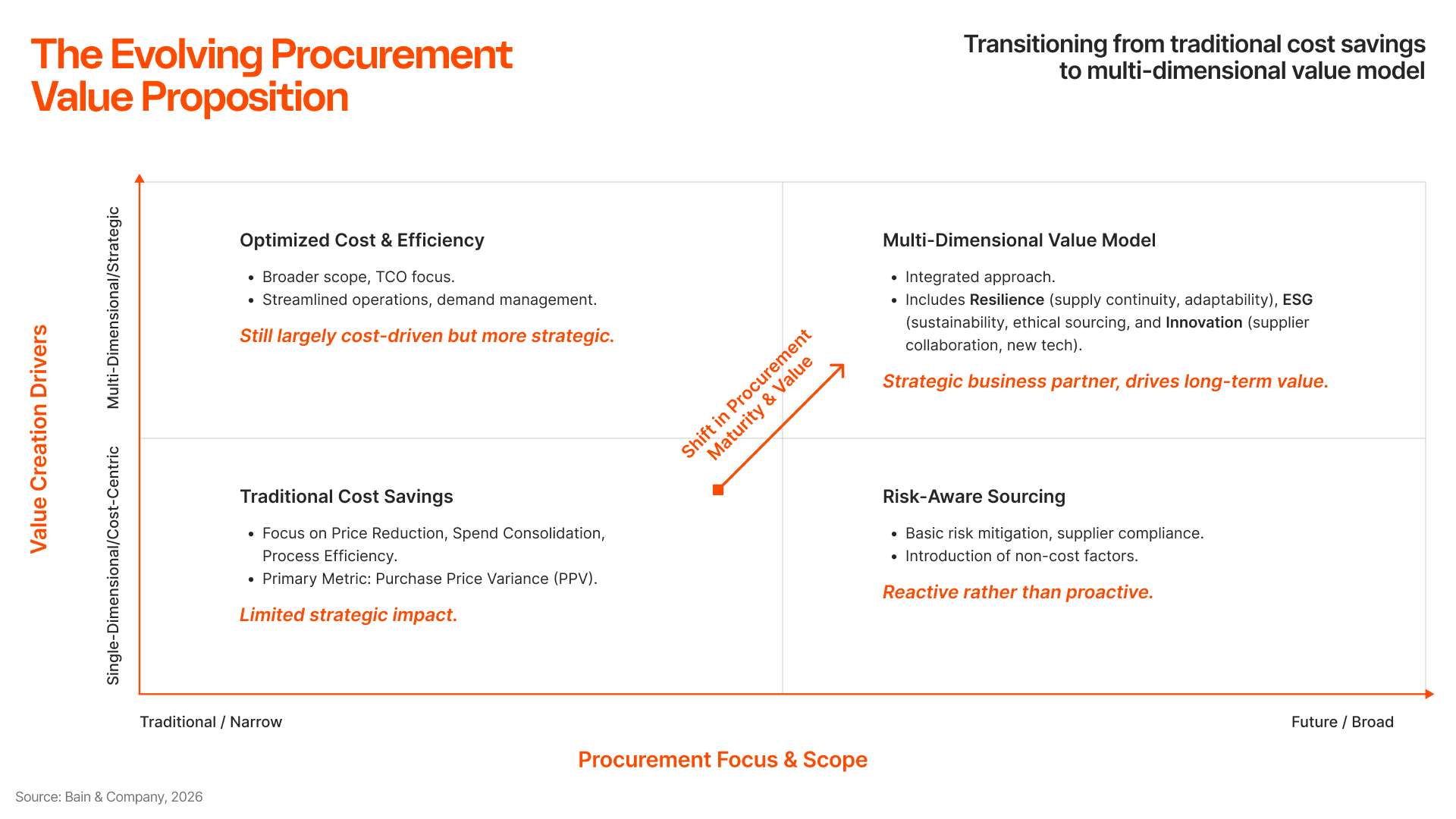
This leadership shift is not merely a cultural ideal; it is an urgent operational response to the widening gap between traditional resources and modern enterprise expectations. The procurement function is currently navigating a critical capacity shortfall where workloads are projected to rise by 9.8%, while staffing levels remain effectively stagnant with only 1% projected growth (Hackett Group, 2025). Simultaneously, the mandate for Procurement is undergoing a radical expansion. Many Procurement organizations have successfully made the shift from reactive back-office order takers to proactive guardians of spend, risk stewards and revenue enablers. Stakeholders now expect Procurement to deliver “total value” which requires a complex matrix of capabilities spanning real-time intelligence and resilience, ESG compliance, and supplier-led innovation (Bain, 2026). Attempting to meet these expanding strategic demands while managing a 9% capacity gap is a failing strategy; the only viable path is to make current teams significantly more effective by fundamentally redesigning how work is performed, shifting the burden of manual data tasks to machines to reclaim human capacity for high-stakes business partnering.
The new procurement skills architecture
Direct AI fluency and semantic skills
The skills that defined success in 2020 are being replaced by high-level linguistic, interpretive, and architectural capabilities. To move beyond basic tools into a mix of cognitive and agentic systems, teams require a blend of functional, technical and leadership skills.
The technical skills required in the age of AI include:
Semantic literacy and precision prompting: Prompting is a language discipline required to translate business intent into precise instructions for agentic workflows. Practitioners must also participate in RLHF (Reinforcement Learning from Human Feedback), labeling AI errors to refine prompt libraries (Gartner, 2025). Example: During a direct materials sourcing event for raw aluminum, the Sourcing lead needs to instruct an AI agent to conduct negotiations across six global regions. These negotiations must encompass not only the base price but also intricate elements such as specific LME index-linking and premium structures.
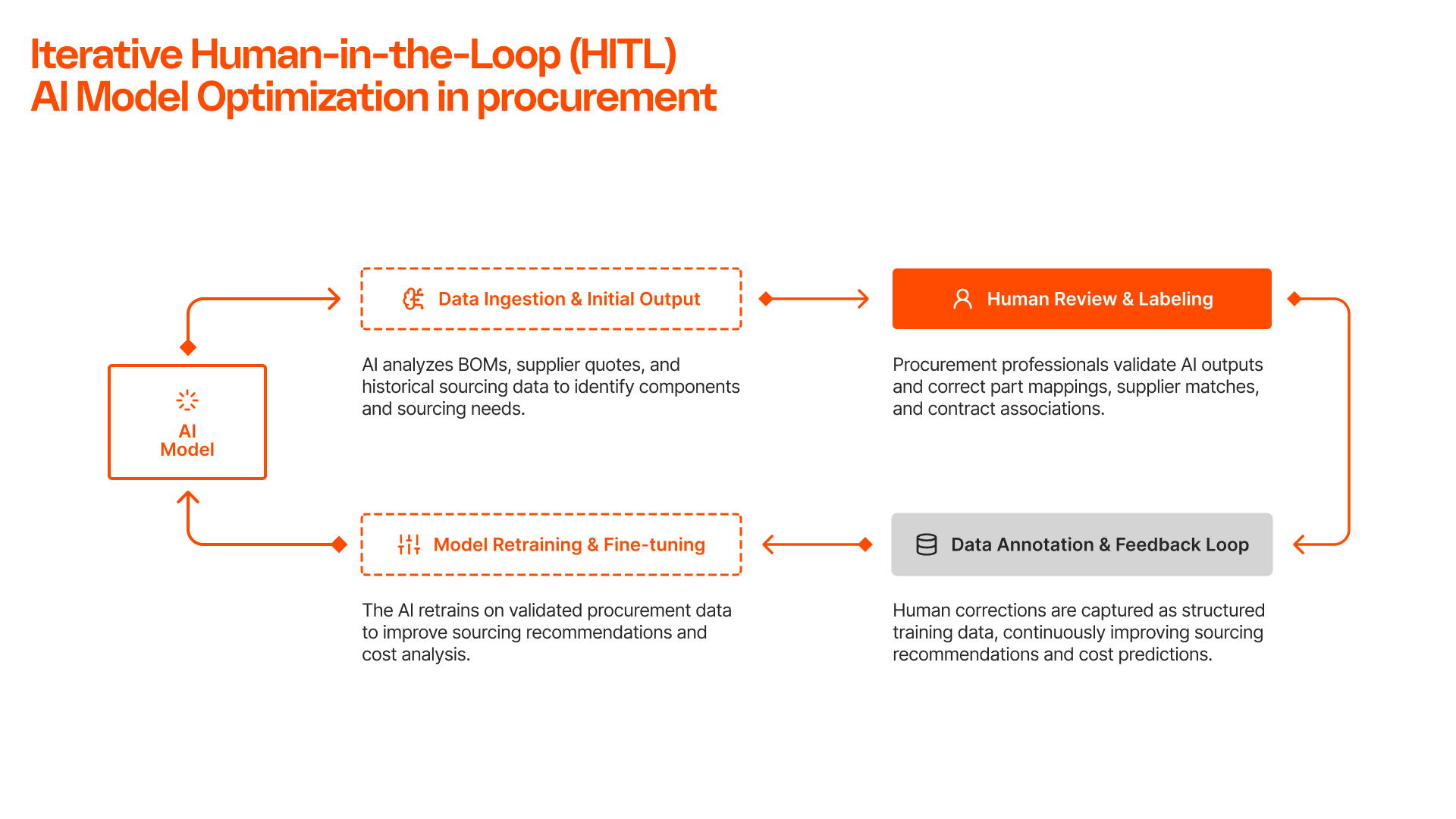
Interpretive reasoning and insight decisioning: The emergence of AI, which delivers prescriptive plans, is causing a transition in focus toward insight decisioning. This involves critically assessing the recommendations generated by AI in the context of constantly shifting and unpredictable markets.. This includes hallucination auditing to ensure insights are grounded in verified spend data. Example: When an AI suggests switching a specialty chemical supplier due to a predicted “force majeure” event, the Sourcing lead must stress-test the AI’s reasoning against real-time port congestion and upstream feedstock availability before approving the move.
Training loop management: Practitioners must engage in capturing root-cause data from system blocks to train agents how to resolve similar scenarios autonomously in the future. Example: If an autonomous sourcing agent fails to progress because it cannot interpret a supplier’s force majeure clause variant, the Contracts or Sourcing lead must update the logic library to recognize that specific legal phrasing to train the agent to handle that exception without human intervention in the next event.
Reclaiming strategy: The strategic aperture and expanded domains
It is critical to distinguish AI fluency from advanced functional mastery. While AI fluency enables the management of the tool, expanded domains represent the deep business and functional disciplines that practitioners are now freed to pursue. Reclaiming capacity allows professionals to master expanded domains that improve performance, potentially increasing strategic output by 30% (McKinsey, 2025).
These expanded domains allow professionals to master a wider set of 2nd and 3rd order variables that define the ultimate outcome of spend and risk management. These domains span functional and leadership skills, including:
Product design and lifecycle context: Moving from “unit price” buyers to logic architects who influence early-stage product design through Design for Excellence (DFx). This involves aligning sourcing with time-to-market requirements and the end-to-end customer lifecycle to ensure the product remains competitive and sustainable from inception. To do so most effectively requires a deep understanding of the company’s products and customer segments.
Geo-politics and macroeconomics: Interpreting AI-simulated disruptions into viable strategies. This requires fluency in geopolitical risk, trade-bloc shifts, and regional labor markets to build supply chains that are not just efficient, but resilient to systemic global shocks.
Applied financial engineering: Mastering the P&L and balance sheet implications of procurement. This goes beyond savings to include EBITDA impact, working capital optimization, and calculating the Net Present Value (NPV) of long-term supply agreements.
Supply base intelligence: Developing a deep “under-the-hood” understanding of supplier production processes and cost structures. This includes mastering should-cost modeling, understanding manufacturing constraints, and mapping sub-tier material flows to identify hidden vulnerabilities in the tier-2 and tier-3 supply base.
Behavioral science and negotiation psychology: Mastering strategic influence and agent persona configuration. This involves defining the negotiation persona (e.g., collaborative partner vs. aggressive price-cutter) and managing the human-to-human relationships that AI-driven data insights identify as high-value.
Systems thinking and information architecture:.Overseeing the vector database and the ingestion of unstructured data (PDFs, emails) to ensure agents have a liquid data layer. This ensures that organizational knowledge is accessible and machine-readable.
AI ethics and governance: Monitoring automated scoring to prevent algorithmic bias. This involves ensuring that automated vendor selection criteria do not inadvertently penalize diverse suppliers or violate data privacy standards.
Roles and organizational shifts
Changes to legacy roles and net new roles
The move toward a hybrid cognitive and agentic enterprise requires a fundamental shift in role scope and required competencies, as practitioners move away from manual data execution and toward the architectural design of the logic that drives automation. Key changes to typical Procurement roles include:
Category managers: Evolve into logic architects and prescriptive insight evaluators. Move from manual RFQ management to digitizing “tribal knowledge” into machine-readable category strategies. Example: Architect the logic for autonomous sourcing of commoditized direct materials, codifying the exact trade-offs between a supplier’s carbon footprint and their regional energy stability so the agent can weight these during a live negotiation.
Procurement operations leads: Transition into orchestration supervisors and exception handlers. Example: Stop processing transactions and start designing the digital twin of the P2P process, triaging AI fraud signals and resolving the 5% of complex logic errors that machines cannot self-correct.
Data and analytics leads: Pivot to ontology stewards who develop and maintain the procurement data ontology, defining the relationships between suppliers, parts, and contracts across different systems.
Supplier management leads: Evolve into ethics and strategy overseers. Example: Monitor automated scoring and segmentation to ensure the AI does not introduce bias, while leading executive dialogues to align partners on long-term technology roadmaps.
Net new roles (the AI core)
Workflow/systems architect: Responsible for the functional design authority of the digital roadmap. They drive fundamental work re-design and ensure that new cognitive tools and agents integrate seamlessly with the broader system landscape to enable end-to-end automated workflows.
Semantic engineer: Maintains the organization’s prompt library. They are the bridge between business intent and machine execution, ensuring instructions are standardized, optimized, and tested for Intent Recognition.
Performance and transformation auditor (CI lead): Monitors the hybrid workforce to identify automation “dead ends.” They track non-human worker KPIs, such as agent resolution rate, and prioritize the digital improvements needed to keep the system running.
Data product owner: Treats procurement data as a strategic asset. Their only KPI is data liquidity: making certain that data sourced from contracts, emails, and market indices is clean, structured to the greatest extent possible, and primed for autonomous analytics.
Redesigning rewards and incentives
Traditional procurement incentives often discourage AI adoption because they favor safe, known manual methods. To engage the workforce, reward systems must be redesigned to prioritize AI-augmented contribution.
This means rewarding the creation of reusable assets. When a Buyer develops a prompt pack or a prescriptive logic model that cuts cycle time by 40%, that contribution should be weighted as heavily as a 5% cost saving. Incentives should shift to prioritizing learning velocity, which means rewarding teams for executing high-quality “hypothesis-test-learn” cycles and structured experimentation. This focus is important regardless of whether the initial pilot successfully met its target ROI (Gartner, 2025).
Shifts in team compositions and management philosophy
These new incentive structures do not exist in a vacuum; they serve as the catalyst for a fundamental rewiring of the organizational chart. Shifting focus from individual task completion to systemic contribution necessitates a move away from rigid silos toward fluid, multidisciplinary teaming.
As traditional hierarchical silos vanish, they are replaced by outcome-focused agentic pods where multidisciplinary human teams oversee AI-orchestrated value streams. In this model, the “Product Owner” is the new Sourcing Lead; they own a business outcome (e.g., resilient direct materials flow) rather than just a category. This structure enables “tiger teams” to form rapidly around emerging disruptions.
However, the organizational shift extends beyond the pod level into a fundamental delayering of the hierarchy. As AI handles the supervision of transactional tasks, the need for deep layers of middle management vanishes. Category towers are moving away from execution-heavy structures toward strategy and governance hubs. In this new architecture, Category Leads act as “Portfolio Architects,” managing a mix of human experts and autonomous agents across multiple pods. Reporting lines become fluid and non-linear; a professional may report to a Category Lead for strategic alignment but work within an agentic pod under a data product owner for daily orchestration.
This necessitates a flatter, more networked orchestration model. Because information flows instantly from AI to decision-makers, the “bottleneck” manager, who once aggregated and reported data, is obsolete. Leadership must pivot from approving work to designing the system that performs work.
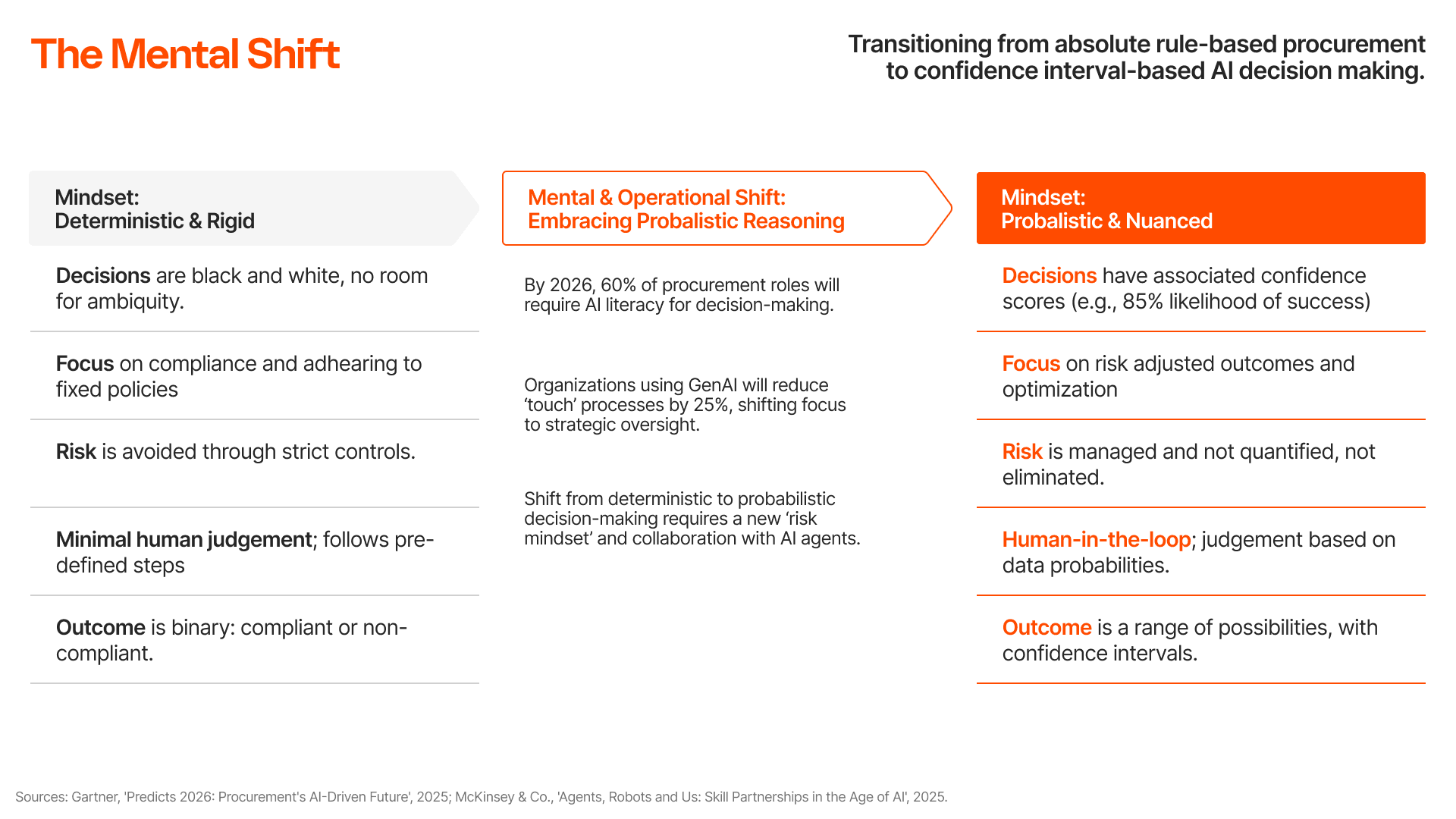
Successfully bridging the gap demands a broader shift in management approach to support deep behavior and mindset shifts, including building the psychological safety required for high-risk experimentation. Without this foundation, employees may engage in “algorithmic apathy.” Furthermore, for practitioners with engineering or SOP-driven backgrounds, the shift from deterministic systems (where X always equals Y) to probabilistic AI systems (where X likely equals Y with 95% confidence) can be profoundly jarring. Professionals accustomed to explainable, rule-based systems must be trained to manage confidence intervals rather than binary certainties (McKinsey, 2025).
Pragmatic action plan: Where to begin in 2026
The transition to an agentic workforce is not a one-size-fits-all exercise; rather, it is a series of disciplined sprints whose sequence and scope are dictated by the organization’s current AI maturity and the specific milestones of the technical roadmap. For an organization in the earlier stages of its AI journey, consider a core set of actions to begin in 2026:
Establish the psychological safety baseline (the cultural foundation):
Launch a “no-fault experiment” program targeting unattractive problems (e.g., messy tail-spend data).
Define clear “safe-to-fail” parameters where failures are analyzed as data points rather than performance issues.
Create a public “learning log” to celebrate the insights gained from unsuccessful pilots.
Decompose and recompose roles (the structural foundation):
Perform a task-level audit to identify the activities that can be fully automated and those that can be enhanced through human and AI collaboration.
Explicitly reassign reclaimed capacity to logic design, orchestration engineering, and strategic influence.
Rewrite job descriptions to focus on decision authority rather than activity completion.
Launch multi-tiered capability sprints (applied learning):
Utilize enterprise AI training for base fluency, then layer on 4-week Procurement applied sprints.
Run hackathon style outputs where teams build functional AI assistants for specific category bottlenecks.
Transition the most successful sprint outputs directly into the global production environment.
Embed co-intelligence teams (structural shift):
Establish a triad model for high-spend categories, pairing a logic architect (CM) with a semantic engineer and a data product owner.
Co-locate these roles (physically or virtually) to ensure technical expertise sits directly next to the business problem.
Measure team success by the percentage of the category strategy that is successfully digitized and autonomous.
Operationalize ex-ante governance (systemic control):
Replace traditional end-of-month post-mortems with “pre-flight” checks driven by real-time AI triggers.
Route autonomous agent signals to human owners for insight decisioning before a final commitment is made.
Audit the “human-in-the-loop” calibration curve quarterly to determine where human intervention is no longer adding value.
To reach the highest level of AI maturity, the technical roadmap must be perfectly synchronized with a dynamic organizational roadmap. Immediate sprints are necessary to secure quick wins, but long-term maturity requires a fundamental re-evaluation of functional boundaries. Matching the rapid evolution of AI models with an equally relentless focus on the human interface is the only way for Procurement to realize its full potential as an intelligent orchestrator of business value.
Addendum: FAQs
What is the difference between Cognitive AI and Agentic AI? Cognitive AI provides prescriptive insights and action plans for humans to evaluate, whereas Agentic AI can autonomously reason, plan, and execute multi-step workflows with calibrated oversight.
Why is “semantic literacy” now a procurement requirement? Because language is now the primary interface; if a professional cannot write precise instructions and perform Intent Recognition Tuning, agents will execute tasks incorrectly.
How should I handle team members who resist these new tools? Leadership requires being transparent about the evolution of roles. Focus on reskilling those willing to adapt to roles but handle persistent refusal through transparent role exits.
How long does it take to see a real return on investment (ROI)? Enterprises using modern agentic systems are seeing significant impact within six months by identifying automation “dead ends” and mining new opportunities for agentic deployment.
Developing and executing successful AI roadmaps is a complex endeavor, and the most common reason for failure is insufficient attention paid to the crucial human and organizational elements. An AI roadmap represents a fundamental shift in how work is performed, decisions are made, and value is created.
Related: Fluency First makes the case that the org chart should move last -- after fluency and systems.
The failure of technology-first approaches
Focusing exclusively on the algorithms, data pipelines, and infrastructure of the AI system will inevitably lead to stalled projects or deployed models that fail to achieve their intended business impact. AI initiatives are doomed to fail unless people, organizational changes, and necessary support are proactively and systematically addressed.
Key areas for organizational and human change to make AI successful
Workforce reskilling and training: The introduction of AI changes job roles. Employees need targeted training not just to understand the AI’s outputs, but to integrate it into their daily workflows, interpret its results, and collaborate effectively with automated systems. This includes training for “AI fluency” across the organization, not just for data scientists.
Change management and adoption: Resistance to change is a natural human reaction, especially when the change involves automation that may be perceived as a threat. Effective change management is mandatory, requiring clear communication about the AI’s purpose, the expected benefits, and a focus on how AI will augment, not merely replace, human capabilities. Our Director of Deployment, Ali Ruben, goes further: in AI deployments, change management is no longer a phase at all -- it runs the whole time. Buy-in from end-users is the ultimate measure of an AI project’s success.
Data governance and stewardship: AI requires high-quality, ethically sourced data. This necessitates establishing new roles, processes, and policies for data governance, ensuring data quality, privacy compliance, and responsible usage. The organizational structure must empower data stewards to maintain this critical asset.
Process redesign and integration: AI tools often highlight inefficient or outdated business processes. A successful roadmap must include the effort to redesign existing processes around the new capabilities offered by AI. Simply bolting on AI to a broken process yields negligible results.
Leadership commitment and sponsorship: AI initiatives require significant investment and often cross departmental boundaries. Without sustained, visible sponsorship from senior leadership, projects will lack the necessary resources and organizational mandate to drive disruptive change. Leadership must champion a culture that values data-driven decision-making and experimentation.
An effective AI roadmap must incorporate a holistic transformation strategy. Neglecting the organizational maturity, cultural readiness, and human support structures will render the most technically brilliant AI solution inert and unable to deliver business value. While many procurement functions have identified and begun to deploy AI use cases in Procurement, the real bottleneck is rarely the technology. It is the human transition into an integrated cognitive and agentic AI structure: one where cognitive AI provides prescriptive insights for better decision-making, and agentic AI executes multi-step tasks autonomously (with calibrated human-in-the-loop oversight).
Leadership in this environment requires a radical commitment to transparency. Uncertainty is the primary driver of resistance; when the evolution of AI unfolds at such a rapid pace, the historical standard of monthly or quarterly updates is insufficient. Leaders must move beyond being “workflow managers” to become “mindset leads” who increase both the frequency and quality of communication to provide a consistent signal within the noise. This ensures the human element of the function feels supported as a partner in the transition, rather than a bystander to it. Crucially, during this transition, leaders must maintain a close read on pockets of adoption and pockets of resistance. By identifying where AI is being embraced and where it is being blocked by a “threat state” (the neurological reaction to professional obsolescence), leaders can proactively provide targeted support to those struggling and amplify the successes of early adopters.
This leadership shift is not merely a cultural ideal; it is an urgent operational response to the widening gap between traditional resources and modern enterprise expectations. The procurement function is currently navigating a critical capacity shortfall where workloads are projected to rise by 9.8%, while staffing levels remain effectively stagnant with only 1% projected growth (Hackett Group, 2025). Simultaneously, the mandate for Procurement is undergoing a radical expansion. Many Procurement organizations have successfully made the shift from reactive back-office order takers to proactive guardians of spend, risk stewards and revenue enablers. Stakeholders now expect Procurement to deliver “total value” which requires a complex matrix of capabilities spanning real-time intelligence and resilience, ESG compliance, and supplier-led innovation (Bain, 2026). Attempting to meet these expanding strategic demands while managing a 9% capacity gap is a failing strategy; the only viable path is to make current teams significantly more effective by fundamentally redesigning how work is performed, shifting the burden of manual data tasks to machines to reclaim human capacity for high-stakes business partnering.
The new procurement skills architecture
Direct AI fluency and semantic skills
The skills that defined success in 2020 are being replaced by high-level linguistic, interpretive, and architectural capabilities. To move beyond basic tools into a mix of cognitive and agentic systems, teams require a blend of functional, technical and leadership skills.
The technical skills required in the age of AI include:
Semantic literacy and precision prompting: Prompting is a language discipline required to translate business intent into precise instructions for agentic workflows. Practitioners must also participate in RLHF (Reinforcement Learning from Human Feedback), labeling AI errors to refine prompt libraries (Gartner, 2025). Example: During a direct materials sourcing event for raw aluminum, the Sourcing lead needs to instruct an AI agent to conduct negotiations across six global regions. These negotiations must encompass not only the base price but also intricate elements such as specific LME index-linking and premium structures.
Interpretive reasoning and insight decisioning: The emergence of AI, which delivers prescriptive plans, is causing a transition in focus toward insight decisioning. This involves critically assessing the recommendations generated by AI in the context of constantly shifting and unpredictable markets.. This includes hallucination auditing to ensure insights are grounded in verified spend data. Example: When an AI suggests switching a specialty chemical supplier due to a predicted “force majeure” event, the Sourcing lead must stress-test the AI’s reasoning against real-time port congestion and upstream feedstock availability before approving the move.
Training loop management: Practitioners must engage in capturing root-cause data from system blocks to train agents how to resolve similar scenarios autonomously in the future. Example: If an autonomous sourcing agent fails to progress because it cannot interpret a supplier’s force majeure clause variant, the Contracts or Sourcing lead must update the logic library to recognize that specific legal phrasing to train the agent to handle that exception without human intervention in the next event.
Reclaiming strategy: The strategic aperture and expanded domains
It is critical to distinguish AI fluency from advanced functional mastery. While AI fluency enables the management of the tool, expanded domains represent the deep business and functional disciplines that practitioners are now freed to pursue. Reclaiming capacity allows professionals to master expanded domains that improve performance, potentially increasing strategic output by 30% (McKinsey, 2025).
These expanded domains allow professionals to master a wider set of 2nd and 3rd order variables that define the ultimate outcome of spend and risk management. These domains span functional and leadership skills, including:
Product design and lifecycle context: Moving from “unit price” buyers to logic architects who influence early-stage product design through Design for Excellence (DFx). This involves aligning sourcing with time-to-market requirements and the end-to-end customer lifecycle to ensure the product remains competitive and sustainable from inception. To do so most effectively requires a deep understanding of the company’s products and customer segments.
Geo-politics and macroeconomics: Interpreting AI-simulated disruptions into viable strategies. This requires fluency in geopolitical risk, trade-bloc shifts, and regional labor markets to build supply chains that are not just efficient, but resilient to systemic global shocks.
Applied financial engineering: Mastering the P&L and balance sheet implications of procurement. This goes beyond savings to include EBITDA impact, working capital optimization, and calculating the Net Present Value (NPV) of long-term supply agreements.
Supply base intelligence: Developing a deep “under-the-hood” understanding of supplier production processes and cost structures. This includes mastering should-cost modeling, understanding manufacturing constraints, and mapping sub-tier material flows to identify hidden vulnerabilities in the tier-2 and tier-3 supply base.
Behavioral science and negotiation psychology: Mastering strategic influence and agent persona configuration. This involves defining the negotiation persona (e.g., collaborative partner vs. aggressive price-cutter) and managing the human-to-human relationships that AI-driven data insights identify as high-value.
Systems thinking and information architecture:.Overseeing the vector database and the ingestion of unstructured data (PDFs, emails) to ensure agents have a liquid data layer. This ensures that organizational knowledge is accessible and machine-readable.
AI ethics and governance: Monitoring automated scoring to prevent algorithmic bias. This involves ensuring that automated vendor selection criteria do not inadvertently penalize diverse suppliers or violate data privacy standards.
Roles and organizational shifts
Changes to legacy roles and net new roles
The move toward a hybrid cognitive and agentic enterprise requires a fundamental shift in role scope and required competencies, as practitioners move away from manual data execution and toward the architectural design of the logic that drives automation. Key changes to typical Procurement roles include:
Category managers: Evolve into logic architects and prescriptive insight evaluators. Move from manual RFQ management to digitizing “tribal knowledge” into machine-readable category strategies. Example: Architect the logic for autonomous sourcing of commoditized direct materials, codifying the exact trade-offs between a supplier’s carbon footprint and their regional energy stability so the agent can weight these during a live negotiation.
Procurement operations leads: Transition into orchestration supervisors and exception handlers. Example: Stop processing transactions and start designing the digital twin of the P2P process, triaging AI fraud signals and resolving the 5% of complex logic errors that machines cannot self-correct.
Data and analytics leads: Pivot to ontology stewards who develop and maintain the procurement data ontology, defining the relationships between suppliers, parts, and contracts across different systems.
Supplier management leads: Evolve into ethics and strategy overseers. Example: Monitor automated scoring and segmentation to ensure the AI does not introduce bias, while leading executive dialogues to align partners on long-term technology roadmaps.
Net new roles (the AI core)
Workflow/systems architect: Responsible for the functional design authority of the digital roadmap. They drive fundamental work re-design and ensure that new cognitive tools and agents integrate seamlessly with the broader system landscape to enable end-to-end automated workflows.
Semantic engineer: Maintains the organization’s prompt library. They are the bridge between business intent and machine execution, ensuring instructions are standardized, optimized, and tested for Intent Recognition.
Performance and transformation auditor (CI lead): Monitors the hybrid workforce to identify automation “dead ends.” They track non-human worker KPIs, such as agent resolution rate, and prioritize the digital improvements needed to keep the system running.
Data product owner: Treats procurement data as a strategic asset. Their only KPI is data liquidity: making certain that data sourced from contracts, emails, and market indices is clean, structured to the greatest extent possible, and primed for autonomous analytics.
Redesigning rewards and incentives
Traditional procurement incentives often discourage AI adoption because they favor safe, known manual methods. To engage the workforce, reward systems must be redesigned to prioritize AI-augmented contribution.
This means rewarding the creation of reusable assets. When a Buyer develops a prompt pack or a prescriptive logic model that cuts cycle time by 40%, that contribution should be weighted as heavily as a 5% cost saving. Incentives should shift to prioritizing learning velocity, which means rewarding teams for executing high-quality “hypothesis-test-learn” cycles and structured experimentation. This focus is important regardless of whether the initial pilot successfully met its target ROI (Gartner, 2025).
Shifts in team compositions and management philosophy
These new incentive structures do not exist in a vacuum; they serve as the catalyst for a fundamental rewiring of the organizational chart. Shifting focus from individual task completion to systemic contribution necessitates a move away from rigid silos toward fluid, multidisciplinary teaming.
As traditional hierarchical silos vanish, they are replaced by outcome-focused agentic pods where multidisciplinary human teams oversee AI-orchestrated value streams. In this model, the “Product Owner” is the new Sourcing Lead; they own a business outcome (e.g., resilient direct materials flow) rather than just a category. This structure enables “tiger teams” to form rapidly around emerging disruptions.
However, the organizational shift extends beyond the pod level into a fundamental delayering of the hierarchy. As AI handles the supervision of transactional tasks, the need for deep layers of middle management vanishes. Category towers are moving away from execution-heavy structures toward strategy and governance hubs. In this new architecture, Category Leads act as “Portfolio Architects,” managing a mix of human experts and autonomous agents across multiple pods. Reporting lines become fluid and non-linear; a professional may report to a Category Lead for strategic alignment but work within an agentic pod under a data product owner for daily orchestration.
This necessitates a flatter, more networked orchestration model. Because information flows instantly from AI to decision-makers, the “bottleneck” manager, who once aggregated and reported data, is obsolete. Leadership must pivot from approving work to designing the system that performs work.
Successfully bridging the gap demands a broader shift in management approach to support deep behavior and mindset shifts, including building the psychological safety required for high-risk experimentation. Without this foundation, employees may engage in “algorithmic apathy.” Furthermore, for practitioners with engineering or SOP-driven backgrounds, the shift from deterministic systems (where X always equals Y) to probabilistic AI systems (where X likely equals Y with 95% confidence) can be profoundly jarring. Professionals accustomed to explainable, rule-based systems must be trained to manage confidence intervals rather than binary certainties (McKinsey, 2025).
Pragmatic action plan: Where to begin in 2026
The transition to an agentic workforce is not a one-size-fits-all exercise; rather, it is a series of disciplined sprints whose sequence and scope are dictated by the organization’s current AI maturity and the specific milestones of the technical roadmap. For an organization in the earlier stages of its AI journey, consider a core set of actions to begin in 2026:
Establish the psychological safety baseline (the cultural foundation):
Launch a “no-fault experiment” program targeting unattractive problems (e.g., messy tail-spend data).
Define clear “safe-to-fail” parameters where failures are analyzed as data points rather than performance issues.
Create a public “learning log” to celebrate the insights gained from unsuccessful pilots.
Decompose and recompose roles (the structural foundation):
Perform a task-level audit to identify the activities that can be fully automated and those that can be enhanced through human and AI collaboration.
Explicitly reassign reclaimed capacity to logic design, orchestration engineering, and strategic influence.
Rewrite job descriptions to focus on decision authority rather than activity completion.
Launch multi-tiered capability sprints (applied learning):
Utilize enterprise AI training for base fluency, then layer on 4-week Procurement applied sprints.
Run hackathon style outputs where teams build functional AI assistants for specific category bottlenecks.
Transition the most successful sprint outputs directly into the global production environment.
Embed co-intelligence teams (structural shift):
Establish a triad model for high-spend categories, pairing a logic architect (CM) with a semantic engineer and a data product owner.
Co-locate these roles (physically or virtually) to ensure technical expertise sits directly next to the business problem.
Measure team success by the percentage of the category strategy that is successfully digitized and autonomous.
Operationalize ex-ante governance (systemic control):
Replace traditional end-of-month post-mortems with “pre-flight” checks driven by real-time AI triggers.
Route autonomous agent signals to human owners for insight decisioning before a final commitment is made.
Audit the “human-in-the-loop” calibration curve quarterly to determine where human intervention is no longer adding value.
To reach the highest level of AI maturity, the technical roadmap must be perfectly synchronized with a dynamic organizational roadmap. Immediate sprints are necessary to secure quick wins, but long-term maturity requires a fundamental re-evaluation of functional boundaries. Matching the rapid evolution of AI models with an equally relentless focus on the human interface is the only way for Procurement to realize its full potential as an intelligent orchestrator of business value.
Addendum: FAQs
What is the difference between Cognitive AI and Agentic AI? Cognitive AI provides prescriptive insights and action plans for humans to evaluate, whereas Agentic AI can autonomously reason, plan, and execute multi-step workflows with calibrated oversight.
Why is “semantic literacy” now a procurement requirement? Because language is now the primary interface; if a professional cannot write precise instructions and perform Intent Recognition Tuning, agents will execute tasks incorrectly.
How should I handle team members who resist these new tools? Leadership requires being transparent about the evolution of roles. Focus on reskilling those willing to adapt to roles but handle persistent refusal through transparent role exits.
How long does it take to see a real return on investment (ROI)? Enterprises using modern agentic systems are seeing significant impact within six months by identifying automation “dead ends” and mining new opportunities for agentic deployment.
Developing and executing successful AI roadmaps is a complex endeavor, and the most common reason for failure is insufficient attention paid to the crucial human and organizational elements. An AI roadmap represents a fundamental shift in how work is performed, decisions are made, and value is created.
Related: Fluency First makes the case that the org chart should move last -- after fluency and systems.
The failure of technology-first approaches
Focusing exclusively on the algorithms, data pipelines, and infrastructure of the AI system will inevitably lead to stalled projects or deployed models that fail to achieve their intended business impact. AI initiatives are doomed to fail unless people, organizational changes, and necessary support are proactively and systematically addressed.
Key areas for organizational and human change to make AI successful
Workforce reskilling and training: The introduction of AI changes job roles. Employees need targeted training not just to understand the AI’s outputs, but to integrate it into their daily workflows, interpret its results, and collaborate effectively with automated systems. This includes training for “AI fluency” across the organization, not just for data scientists.
Change management and adoption: Resistance to change is a natural human reaction, especially when the change involves automation that may be perceived as a threat. Effective change management is mandatory, requiring clear communication about the AI’s purpose, the expected benefits, and a focus on how AI will augment, not merely replace, human capabilities. Our Director of Deployment, Ali Ruben, goes further: in AI deployments, change management is no longer a phase at all -- it runs the whole time. Buy-in from end-users is the ultimate measure of an AI project’s success.
Data governance and stewardship: AI requires high-quality, ethically sourced data. This necessitates establishing new roles, processes, and policies for data governance, ensuring data quality, privacy compliance, and responsible usage. The organizational structure must empower data stewards to maintain this critical asset.
Process redesign and integration: AI tools often highlight inefficient or outdated business processes. A successful roadmap must include the effort to redesign existing processes around the new capabilities offered by AI. Simply bolting on AI to a broken process yields negligible results.
Leadership commitment and sponsorship: AI initiatives require significant investment and often cross departmental boundaries. Without sustained, visible sponsorship from senior leadership, projects will lack the necessary resources and organizational mandate to drive disruptive change. Leadership must champion a culture that values data-driven decision-making and experimentation.
An effective AI roadmap must incorporate a holistic transformation strategy. Neglecting the organizational maturity, cultural readiness, and human support structures will render the most technically brilliant AI solution inert and unable to deliver business value. While many procurement functions have identified and begun to deploy AI use cases in Procurement, the real bottleneck is rarely the technology. It is the human transition into an integrated cognitive and agentic AI structure: one where cognitive AI provides prescriptive insights for better decision-making, and agentic AI executes multi-step tasks autonomously (with calibrated human-in-the-loop oversight).
Leadership in this environment requires a radical commitment to transparency. Uncertainty is the primary driver of resistance; when the evolution of AI unfolds at such a rapid pace, the historical standard of monthly or quarterly updates is insufficient. Leaders must move beyond being “workflow managers” to become “mindset leads” who increase both the frequency and quality of communication to provide a consistent signal within the noise. This ensures the human element of the function feels supported as a partner in the transition, rather than a bystander to it. Crucially, during this transition, leaders must maintain a close read on pockets of adoption and pockets of resistance. By identifying where AI is being embraced and where it is being blocked by a “threat state” (the neurological reaction to professional obsolescence), leaders can proactively provide targeted support to those struggling and amplify the successes of early adopters.
This leadership shift is not merely a cultural ideal; it is an urgent operational response to the widening gap between traditional resources and modern enterprise expectations. The procurement function is currently navigating a critical capacity shortfall where workloads are projected to rise by 9.8%, while staffing levels remain effectively stagnant with only 1% projected growth (Hackett Group, 2025). Simultaneously, the mandate for Procurement is undergoing a radical expansion. Many Procurement organizations have successfully made the shift from reactive back-office order takers to proactive guardians of spend, risk stewards and revenue enablers. Stakeholders now expect Procurement to deliver “total value” which requires a complex matrix of capabilities spanning real-time intelligence and resilience, ESG compliance, and supplier-led innovation (Bain, 2026). Attempting to meet these expanding strategic demands while managing a 9% capacity gap is a failing strategy; the only viable path is to make current teams significantly more effective by fundamentally redesigning how work is performed, shifting the burden of manual data tasks to machines to reclaim human capacity for high-stakes business partnering.
The new procurement skills architecture
Direct AI fluency and semantic skills
The skills that defined success in 2020 are being replaced by high-level linguistic, interpretive, and architectural capabilities. To move beyond basic tools into a mix of cognitive and agentic systems, teams require a blend of functional, technical and leadership skills.
The technical skills required in the age of AI include:
Semantic literacy and precision prompting: Prompting is a language discipline required to translate business intent into precise instructions for agentic workflows. Practitioners must also participate in RLHF (Reinforcement Learning from Human Feedback), labeling AI errors to refine prompt libraries (Gartner, 2025). Example: During a direct materials sourcing event for raw aluminum, the Sourcing lead needs to instruct an AI agent to conduct negotiations across six global regions. These negotiations must encompass not only the base price but also intricate elements such as specific LME index-linking and premium structures.
Interpretive reasoning and insight decisioning: The emergence of AI, which delivers prescriptive plans, is causing a transition in focus toward insight decisioning. This involves critically assessing the recommendations generated by AI in the context of constantly shifting and unpredictable markets.. This includes hallucination auditing to ensure insights are grounded in verified spend data. Example: When an AI suggests switching a specialty chemical supplier due to a predicted “force majeure” event, the Sourcing lead must stress-test the AI’s reasoning against real-time port congestion and upstream feedstock availability before approving the move.
Training loop management: Practitioners must engage in capturing root-cause data from system blocks to train agents how to resolve similar scenarios autonomously in the future. Example: If an autonomous sourcing agent fails to progress because it cannot interpret a supplier’s force majeure clause variant, the Contracts or Sourcing lead must update the logic library to recognize that specific legal phrasing to train the agent to handle that exception without human intervention in the next event.
Reclaiming strategy: The strategic aperture and expanded domains
It is critical to distinguish AI fluency from advanced functional mastery. While AI fluency enables the management of the tool, expanded domains represent the deep business and functional disciplines that practitioners are now freed to pursue. Reclaiming capacity allows professionals to master expanded domains that improve performance, potentially increasing strategic output by 30% (McKinsey, 2025).
These expanded domains allow professionals to master a wider set of 2nd and 3rd order variables that define the ultimate outcome of spend and risk management. These domains span functional and leadership skills, including:
Product design and lifecycle context: Moving from “unit price” buyers to logic architects who influence early-stage product design through Design for Excellence (DFx). This involves aligning sourcing with time-to-market requirements and the end-to-end customer lifecycle to ensure the product remains competitive and sustainable from inception. To do so most effectively requires a deep understanding of the company’s products and customer segments.
Geo-politics and macroeconomics: Interpreting AI-simulated disruptions into viable strategies. This requires fluency in geopolitical risk, trade-bloc shifts, and regional labor markets to build supply chains that are not just efficient, but resilient to systemic global shocks.
Applied financial engineering: Mastering the P&L and balance sheet implications of procurement. This goes beyond savings to include EBITDA impact, working capital optimization, and calculating the Net Present Value (NPV) of long-term supply agreements.
Supply base intelligence: Developing a deep “under-the-hood” understanding of supplier production processes and cost structures. This includes mastering should-cost modeling, understanding manufacturing constraints, and mapping sub-tier material flows to identify hidden vulnerabilities in the tier-2 and tier-3 supply base.
Behavioral science and negotiation psychology: Mastering strategic influence and agent persona configuration. This involves defining the negotiation persona (e.g., collaborative partner vs. aggressive price-cutter) and managing the human-to-human relationships that AI-driven data insights identify as high-value.
Systems thinking and information architecture:.Overseeing the vector database and the ingestion of unstructured data (PDFs, emails) to ensure agents have a liquid data layer. This ensures that organizational knowledge is accessible and machine-readable.
AI ethics and governance: Monitoring automated scoring to prevent algorithmic bias. This involves ensuring that automated vendor selection criteria do not inadvertently penalize diverse suppliers or violate data privacy standards.
Roles and organizational shifts
Changes to legacy roles and net new roles
The move toward a hybrid cognitive and agentic enterprise requires a fundamental shift in role scope and required competencies, as practitioners move away from manual data execution and toward the architectural design of the logic that drives automation. Key changes to typical Procurement roles include:
Category managers: Evolve into logic architects and prescriptive insight evaluators. Move from manual RFQ management to digitizing “tribal knowledge” into machine-readable category strategies. Example: Architect the logic for autonomous sourcing of commoditized direct materials, codifying the exact trade-offs between a supplier’s carbon footprint and their regional energy stability so the agent can weight these during a live negotiation.
Procurement operations leads: Transition into orchestration supervisors and exception handlers. Example: Stop processing transactions and start designing the digital twin of the P2P process, triaging AI fraud signals and resolving the 5% of complex logic errors that machines cannot self-correct.
Data and analytics leads: Pivot to ontology stewards who develop and maintain the procurement data ontology, defining the relationships between suppliers, parts, and contracts across different systems.
Supplier management leads: Evolve into ethics and strategy overseers. Example: Monitor automated scoring and segmentation to ensure the AI does not introduce bias, while leading executive dialogues to align partners on long-term technology roadmaps.
Net new roles (the AI core)
Workflow/systems architect: Responsible for the functional design authority of the digital roadmap. They drive fundamental work re-design and ensure that new cognitive tools and agents integrate seamlessly with the broader system landscape to enable end-to-end automated workflows.
Semantic engineer: Maintains the organization’s prompt library. They are the bridge between business intent and machine execution, ensuring instructions are standardized, optimized, and tested for Intent Recognition.
Performance and transformation auditor (CI lead): Monitors the hybrid workforce to identify automation “dead ends.” They track non-human worker KPIs, such as agent resolution rate, and prioritize the digital improvements needed to keep the system running.
Data product owner: Treats procurement data as a strategic asset. Their only KPI is data liquidity: making certain that data sourced from contracts, emails, and market indices is clean, structured to the greatest extent possible, and primed for autonomous analytics.
Redesigning rewards and incentives
Traditional procurement incentives often discourage AI adoption because they favor safe, known manual methods. To engage the workforce, reward systems must be redesigned to prioritize AI-augmented contribution.
This means rewarding the creation of reusable assets. When a Buyer develops a prompt pack or a prescriptive logic model that cuts cycle time by 40%, that contribution should be weighted as heavily as a 5% cost saving. Incentives should shift to prioritizing learning velocity, which means rewarding teams for executing high-quality “hypothesis-test-learn” cycles and structured experimentation. This focus is important regardless of whether the initial pilot successfully met its target ROI (Gartner, 2025).
Shifts in team compositions and management philosophy
These new incentive structures do not exist in a vacuum; they serve as the catalyst for a fundamental rewiring of the organizational chart. Shifting focus from individual task completion to systemic contribution necessitates a move away from rigid silos toward fluid, multidisciplinary teaming.
As traditional hierarchical silos vanish, they are replaced by outcome-focused agentic pods where multidisciplinary human teams oversee AI-orchestrated value streams. In this model, the “Product Owner” is the new Sourcing Lead; they own a business outcome (e.g., resilient direct materials flow) rather than just a category. This structure enables “tiger teams” to form rapidly around emerging disruptions.
However, the organizational shift extends beyond the pod level into a fundamental delayering of the hierarchy. As AI handles the supervision of transactional tasks, the need for deep layers of middle management vanishes. Category towers are moving away from execution-heavy structures toward strategy and governance hubs. In this new architecture, Category Leads act as “Portfolio Architects,” managing a mix of human experts and autonomous agents across multiple pods. Reporting lines become fluid and non-linear; a professional may report to a Category Lead for strategic alignment but work within an agentic pod under a data product owner for daily orchestration.
This necessitates a flatter, more networked orchestration model. Because information flows instantly from AI to decision-makers, the “bottleneck” manager, who once aggregated and reported data, is obsolete. Leadership must pivot from approving work to designing the system that performs work.
Successfully bridging the gap demands a broader shift in management approach to support deep behavior and mindset shifts, including building the psychological safety required for high-risk experimentation. Without this foundation, employees may engage in “algorithmic apathy.” Furthermore, for practitioners with engineering or SOP-driven backgrounds, the shift from deterministic systems (where X always equals Y) to probabilistic AI systems (where X likely equals Y with 95% confidence) can be profoundly jarring. Professionals accustomed to explainable, rule-based systems must be trained to manage confidence intervals rather than binary certainties (McKinsey, 2025).
Pragmatic action plan: Where to begin in 2026
The transition to an agentic workforce is not a one-size-fits-all exercise; rather, it is a series of disciplined sprints whose sequence and scope are dictated by the organization’s current AI maturity and the specific milestones of the technical roadmap. For an organization in the earlier stages of its AI journey, consider a core set of actions to begin in 2026:
Establish the psychological safety baseline (the cultural foundation):
Launch a “no-fault experiment” program targeting unattractive problems (e.g., messy tail-spend data).
Define clear “safe-to-fail” parameters where failures are analyzed as data points rather than performance issues.
Create a public “learning log” to celebrate the insights gained from unsuccessful pilots.
Decompose and recompose roles (the structural foundation):
Perform a task-level audit to identify the activities that can be fully automated and those that can be enhanced through human and AI collaboration.
Explicitly reassign reclaimed capacity to logic design, orchestration engineering, and strategic influence.
Rewrite job descriptions to focus on decision authority rather than activity completion.
Launch multi-tiered capability sprints (applied learning):
Utilize enterprise AI training for base fluency, then layer on 4-week Procurement applied sprints.
Run hackathon style outputs where teams build functional AI assistants for specific category bottlenecks.
Transition the most successful sprint outputs directly into the global production environment.
Embed co-intelligence teams (structural shift):
Establish a triad model for high-spend categories, pairing a logic architect (CM) with a semantic engineer and a data product owner.
Co-locate these roles (physically or virtually) to ensure technical expertise sits directly next to the business problem.
Measure team success by the percentage of the category strategy that is successfully digitized and autonomous.
Operationalize ex-ante governance (systemic control):
Replace traditional end-of-month post-mortems with “pre-flight” checks driven by real-time AI triggers.
Route autonomous agent signals to human owners for insight decisioning before a final commitment is made.
Audit the “human-in-the-loop” calibration curve quarterly to determine where human intervention is no longer adding value.
To reach the highest level of AI maturity, the technical roadmap must be perfectly synchronized with a dynamic organizational roadmap. Immediate sprints are necessary to secure quick wins, but long-term maturity requires a fundamental re-evaluation of functional boundaries. Matching the rapid evolution of AI models with an equally relentless focus on the human interface is the only way for Procurement to realize its full potential as an intelligent orchestrator of business value.
Addendum: FAQs
What is the difference between Cognitive AI and Agentic AI? Cognitive AI provides prescriptive insights and action plans for humans to evaluate, whereas Agentic AI can autonomously reason, plan, and execute multi-step workflows with calibrated oversight.
Why is “semantic literacy” now a procurement requirement? Because language is now the primary interface; if a professional cannot write precise instructions and perform Intent Recognition Tuning, agents will execute tasks incorrectly.
How should I handle team members who resist these new tools? Leadership requires being transparent about the evolution of roles. Focus on reskilling those willing to adapt to roles but handle persistent refusal through transparent role exits.
How long does it take to see a real return on investment (ROI)? Enterprises using modern agentic systems are seeing significant impact within six months by identifying automation “dead ends” and mining new opportunities for agentic deployment.
Read more


Read more
Read more
Faster sourcing. Lower cost. Less chaos.
See how LightSource connects engineering, procurement, and suppliers in one operating system to help you launch faster at lower cost.
SOC 2
Kearney #1 2024
Gartner Cool Vendor
Procuretech 100
G2 Top Rated
Faster sourcing. Lower cost. Less chaos.
See how LightSource connects engineering, procurement, and suppliers in one operating system to help you launch faster at lower cost.
SOC 2
Kearney #1 2024
Gartner Cool Vendor
Procuretech 100
G2 Top Rated
Faster sourcing. Lower cost. Less chaos.
See how LightSource connects engineering, procurement, and suppliers in one operating system to help you launch faster at lower cost.
SOC 2
Kearney #1 2024
Gartner Cool Vendor
Procuretech 100
G2 Top Rated
Trusted by:
Trusted by:
Trusted by: